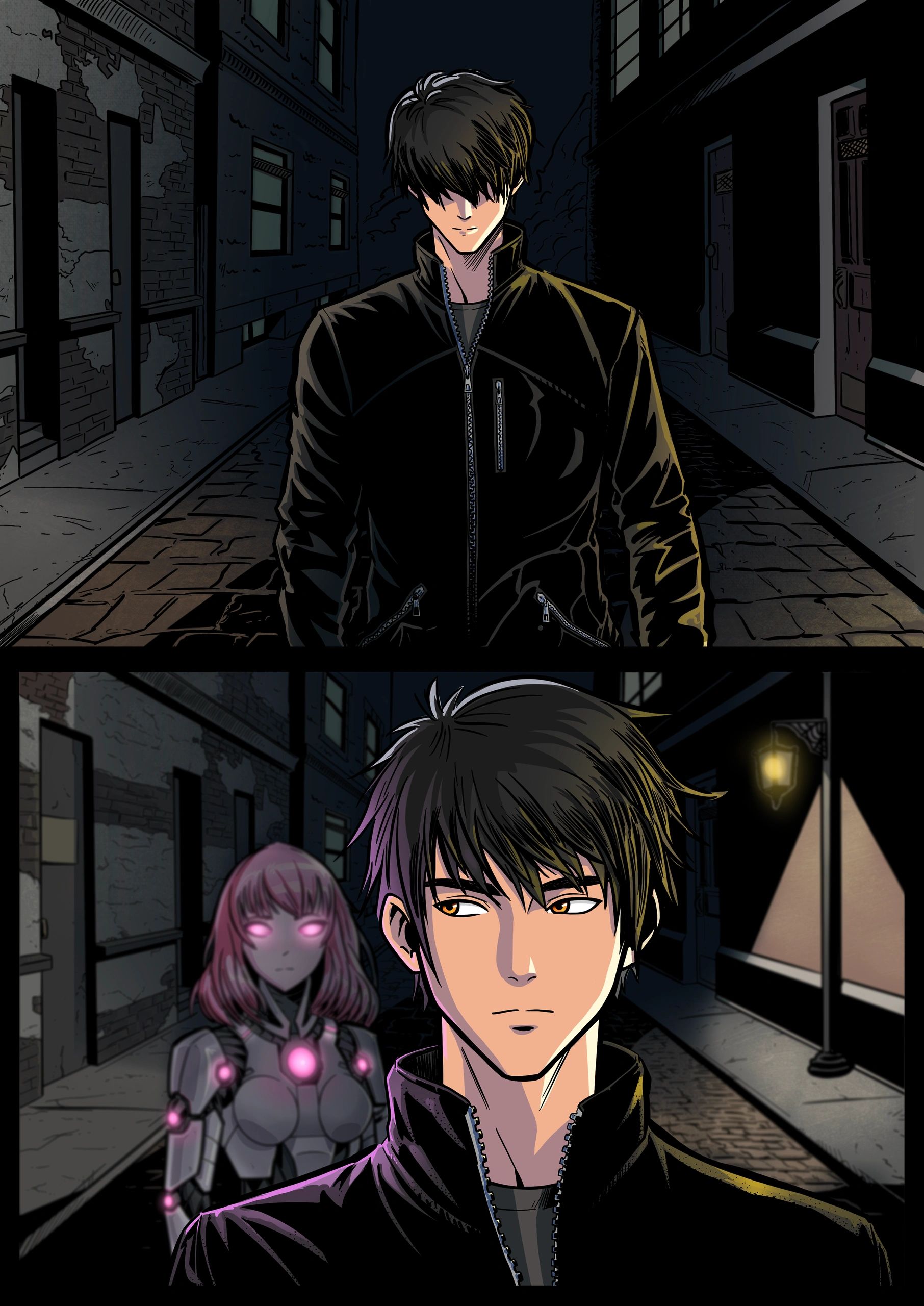
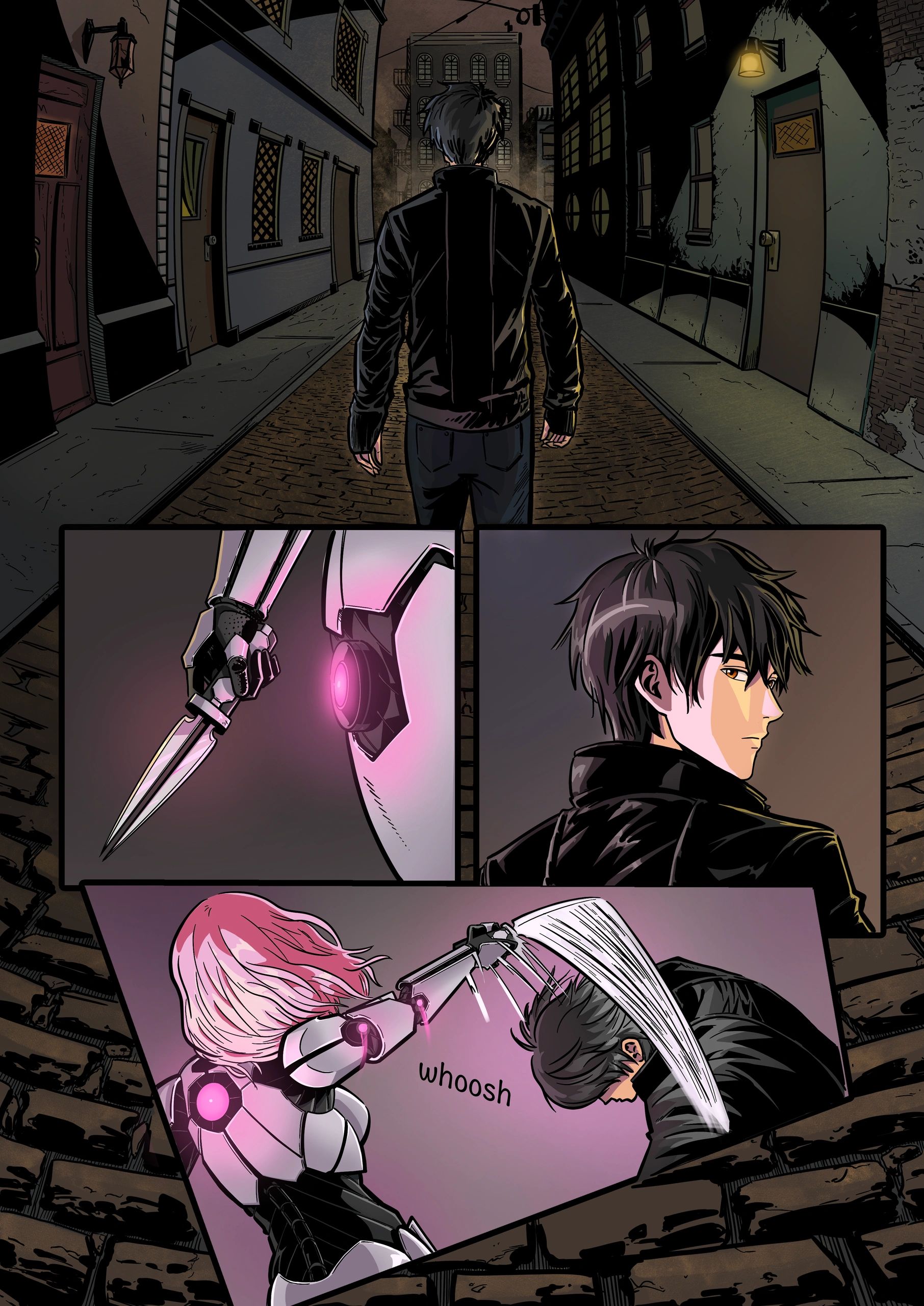
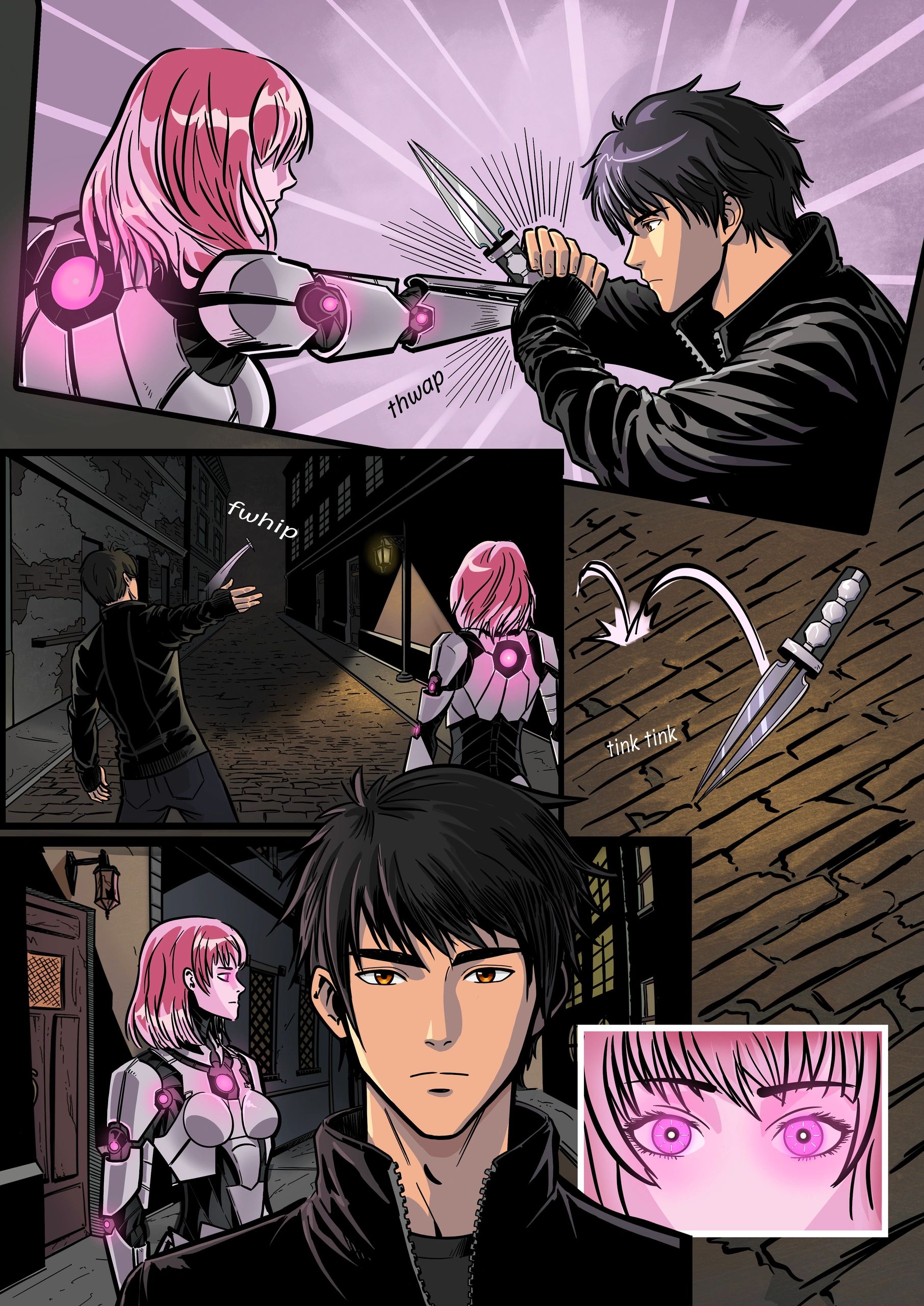
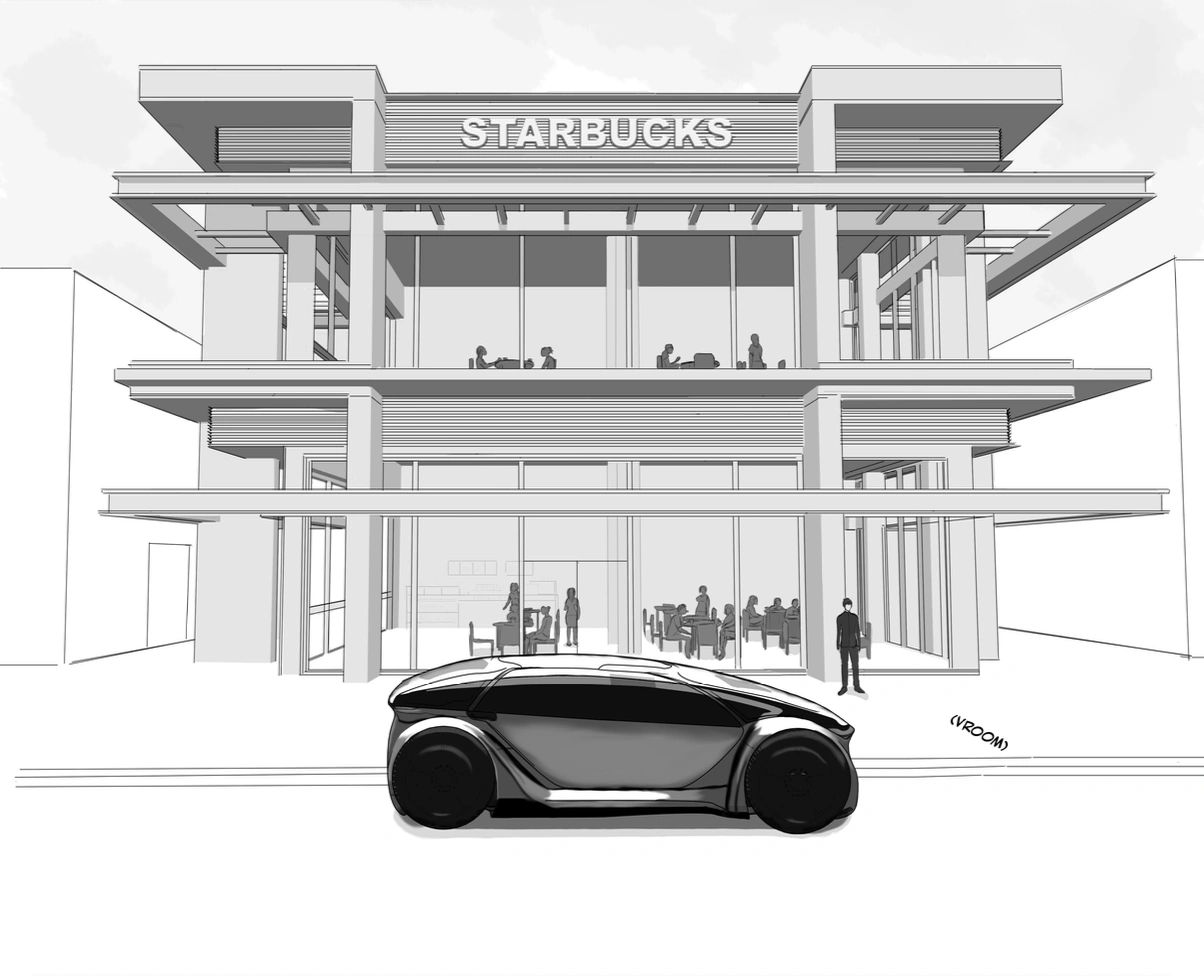
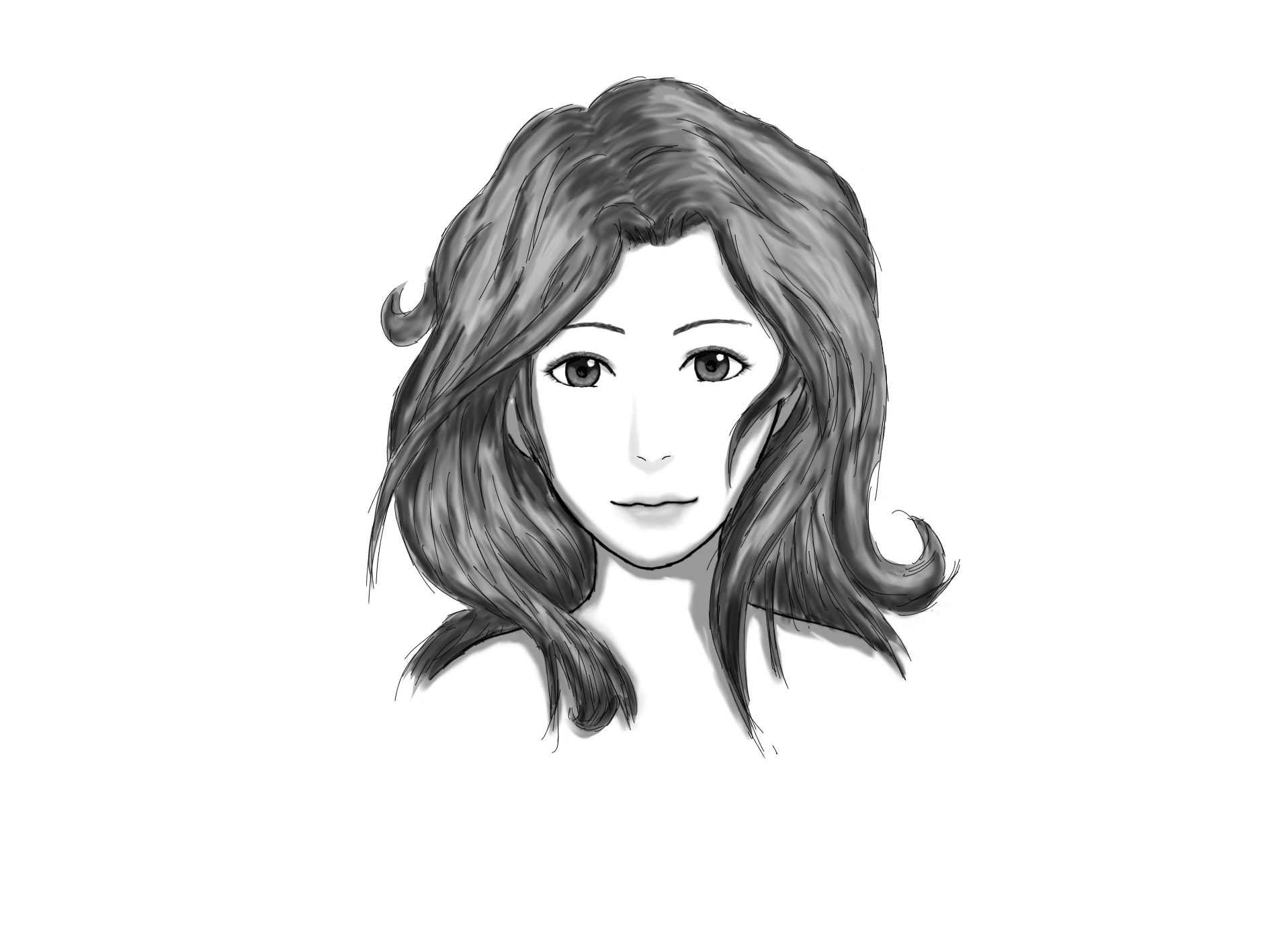
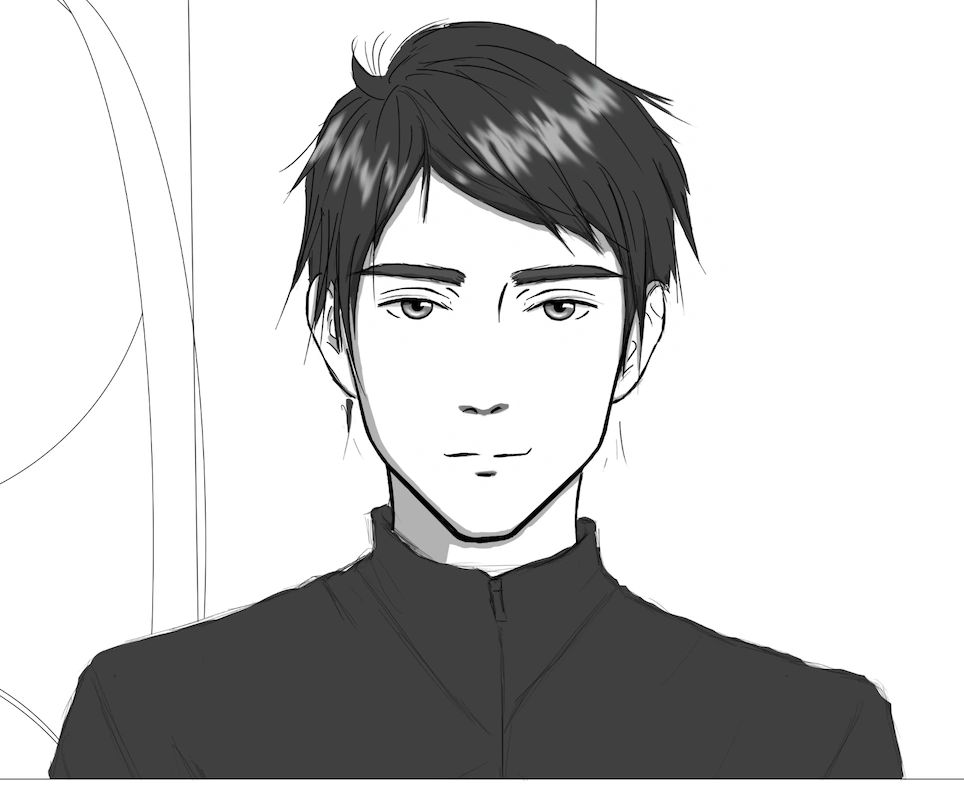
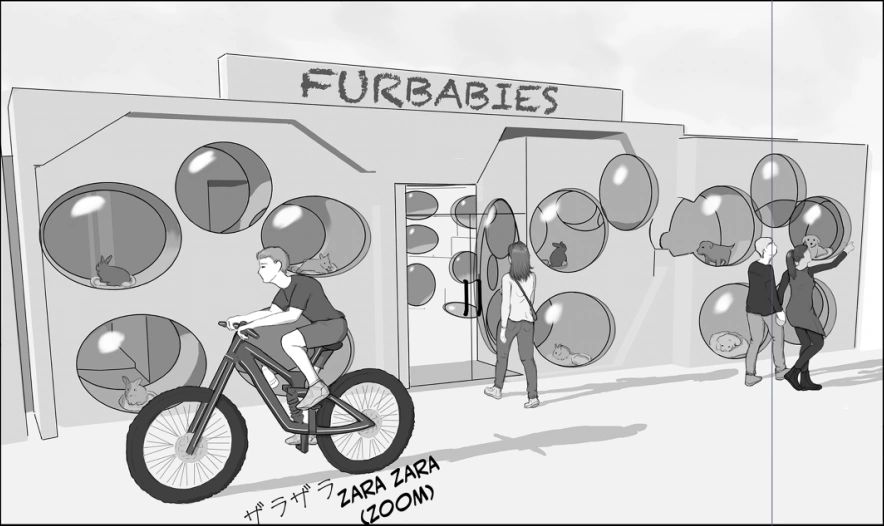
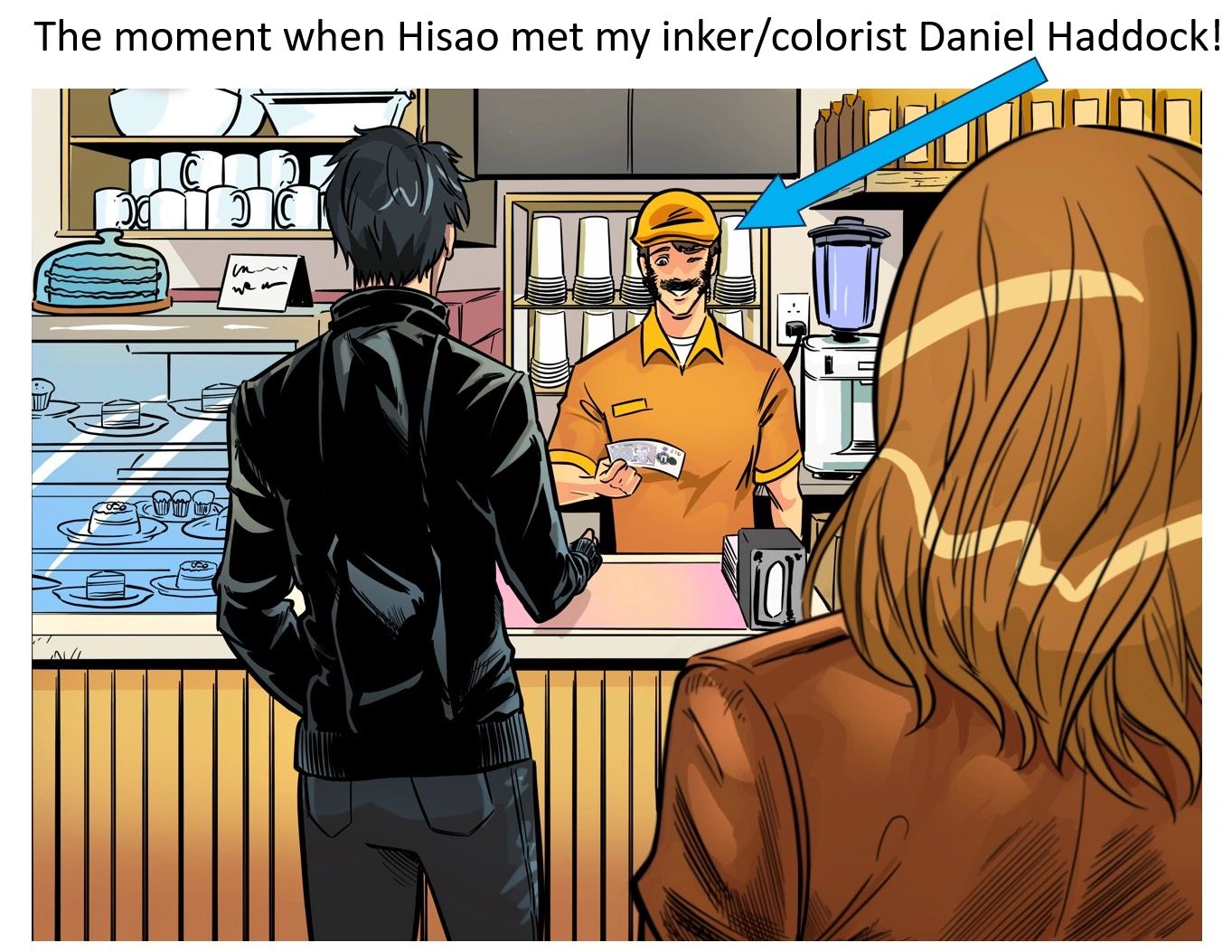
It started as a screenplay, then became 221 pages of storyboards, and now has gone through several iterations of hand-drawn pencils, inks, and colors. The size of the project was daunting, but little by little, my confidence grew that I would be able to pull this off.
After reviewing the work of dozens of artists, I got very lucky when Daniel Haddock saw my post and applied to be my inker/colorist! It wasn't just his great talent as an artist that caught my attention; it was his enthusiasm, deep knowledge and experience, and history of hand-drawn work. Working with him has been a blast! Be sure to follow him on Instagram and YouTube.
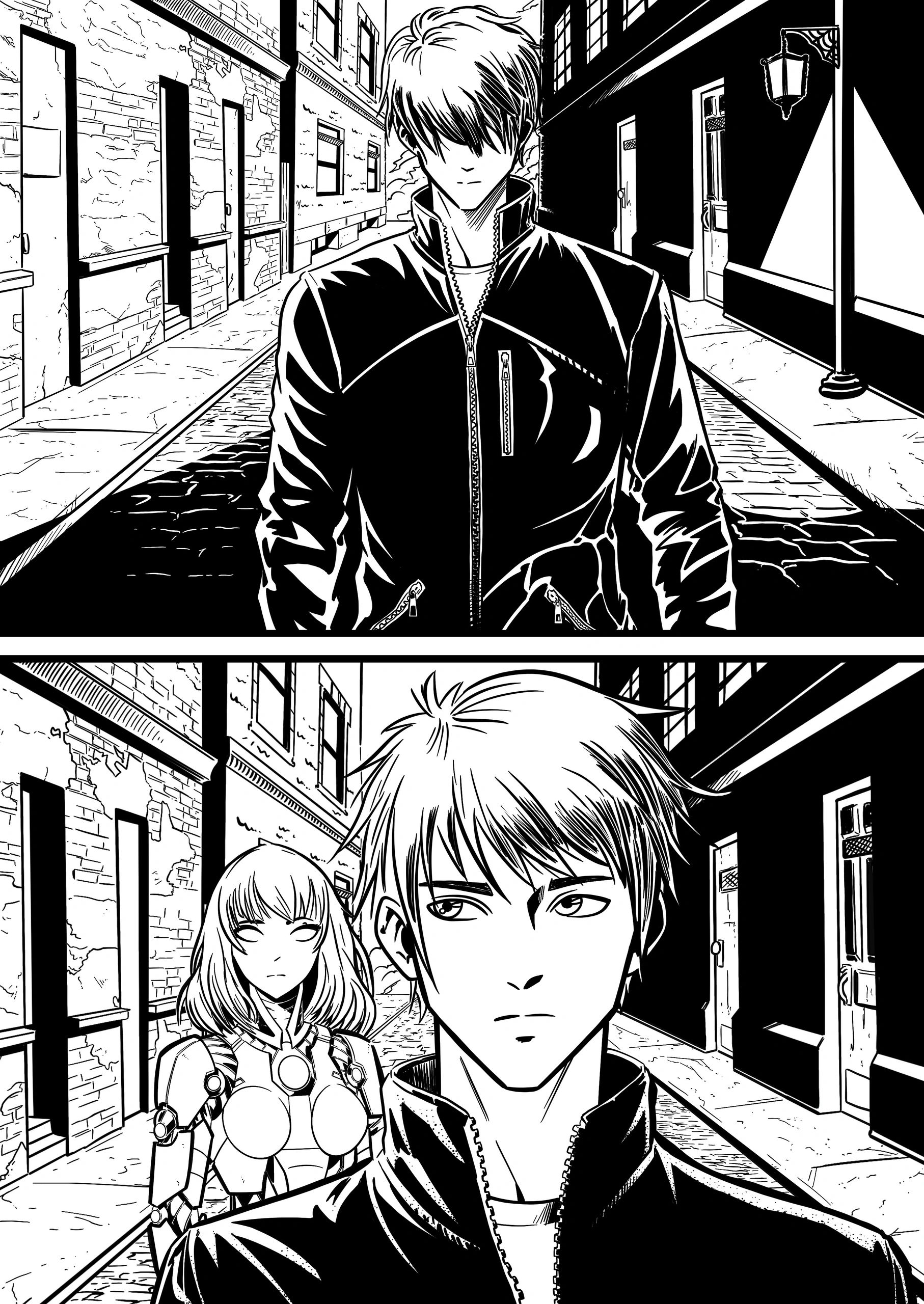
Pencils → inks → color
From roughs to the final prologue
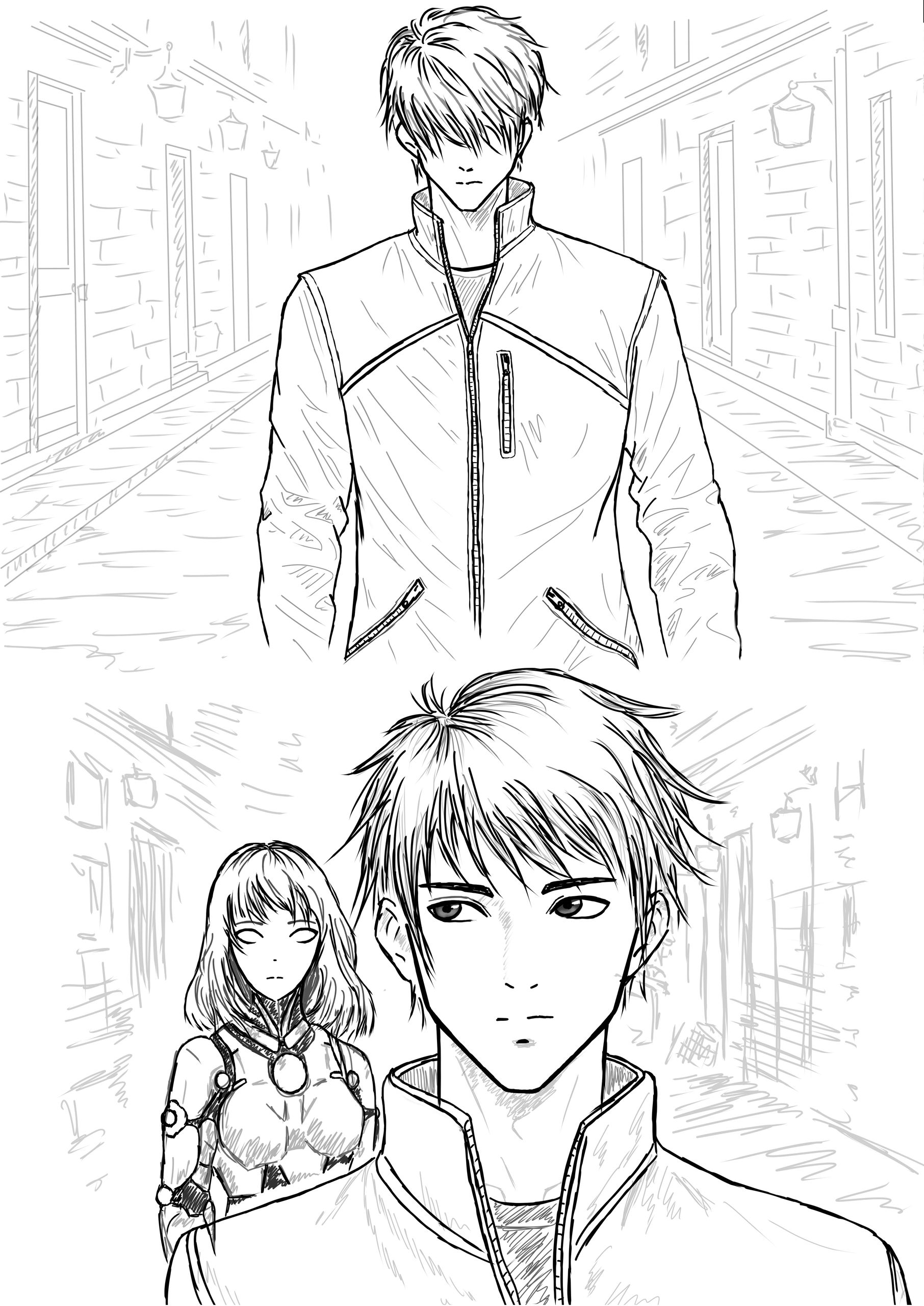
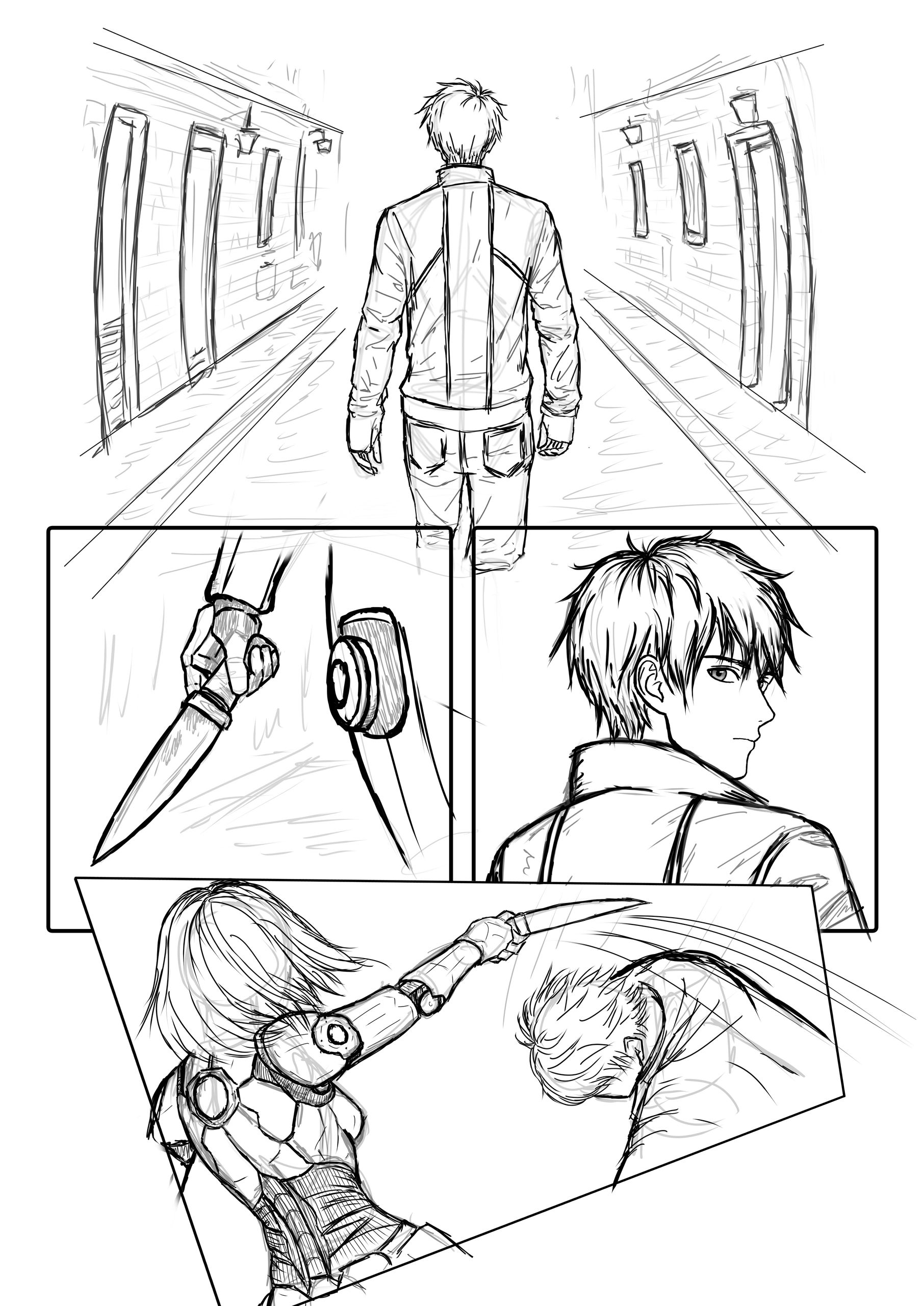
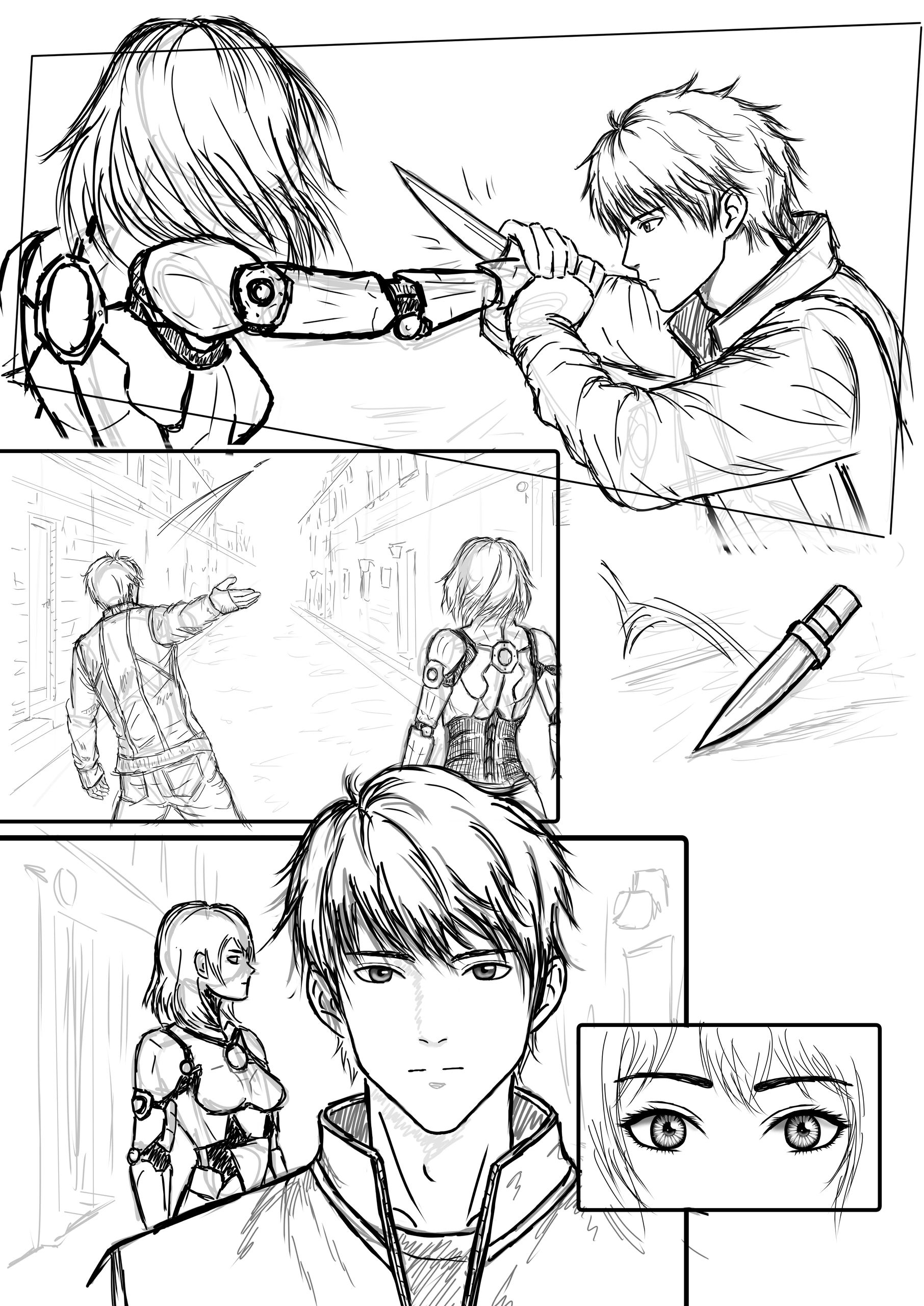
Follow the same three pages through Jacqueline's initial drawings, Daniel Haddock's linework, and the finished color sequence.
My initial roughs
Stage 01 · Pencils
123
Daniel Haddock's linework
Stage 02 · Inks
123
The final prologue
Stage 03 · Color
123
Learning to draw
A long journey begins
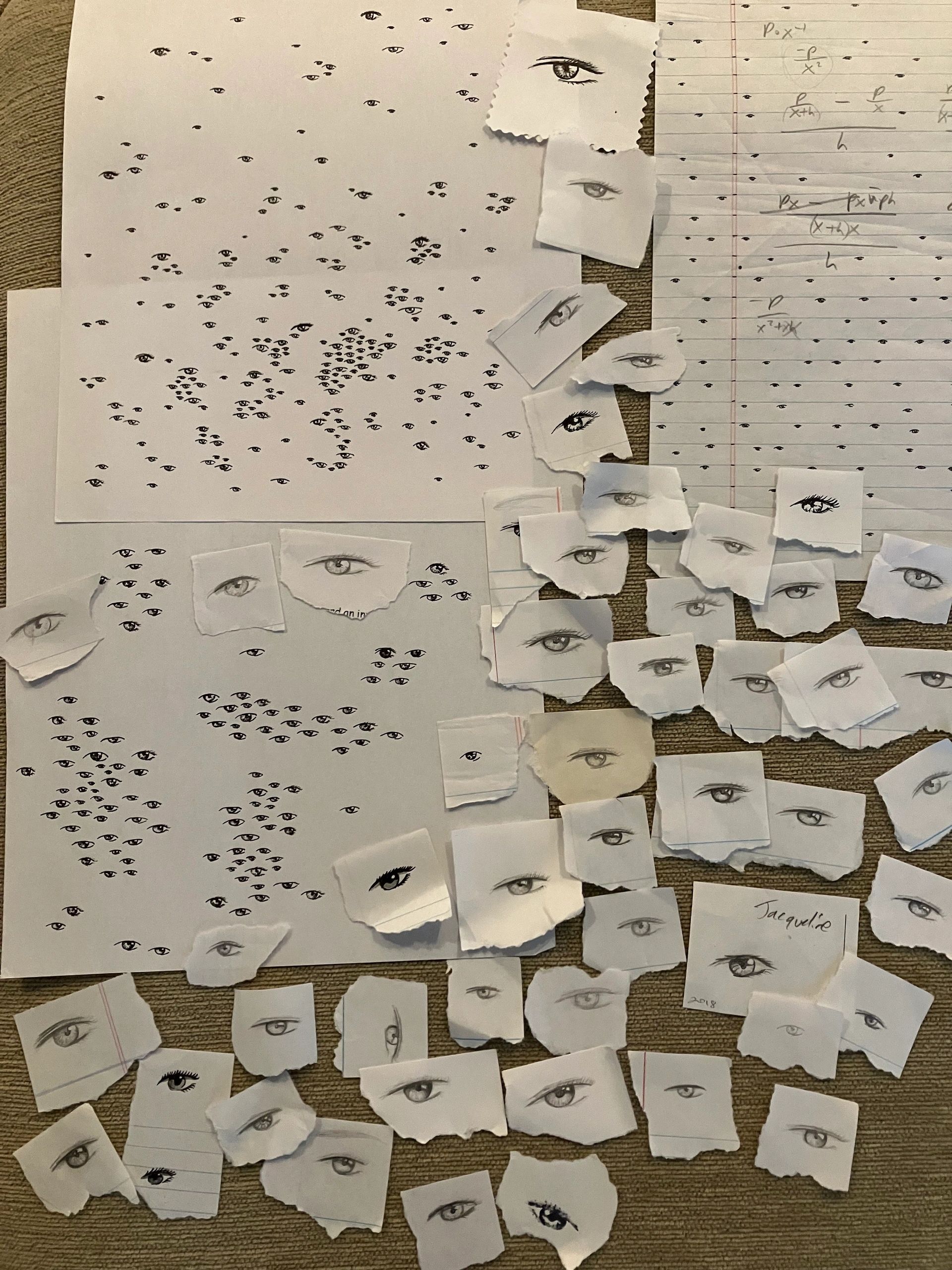
Eyes were first...
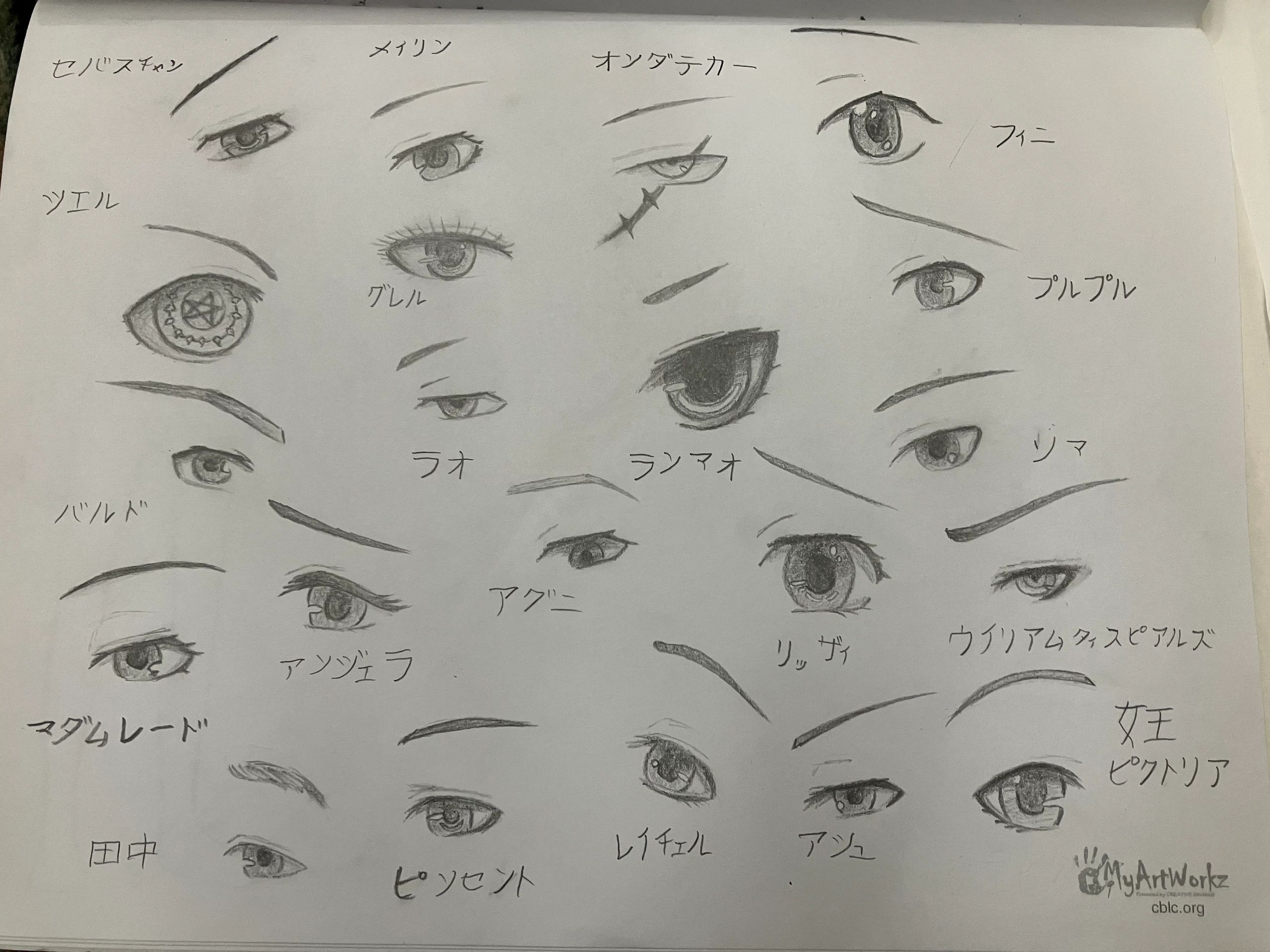
My journey towards creating a graphic novel started with learning how to draw. Little did I know that the first thing I practiced drawing would turn out to be really important. Starting in 8th grade, I'd draw eyes obsessively until I was satisfied with how they looked. I couldn’t draw entire bodies yet, but at least I could draw something!
However, I soon found a way to draw complete figures. I could position physical artist "mannequins", photograph them, and import the pictures into Photoshop as opaque reference layers. I would then re-draw the figures by hand and add the eyes I had spent all that time practicing.
I also practiced by drawing the eyes of each character from my favorite manga.
An Award-winning screenplay
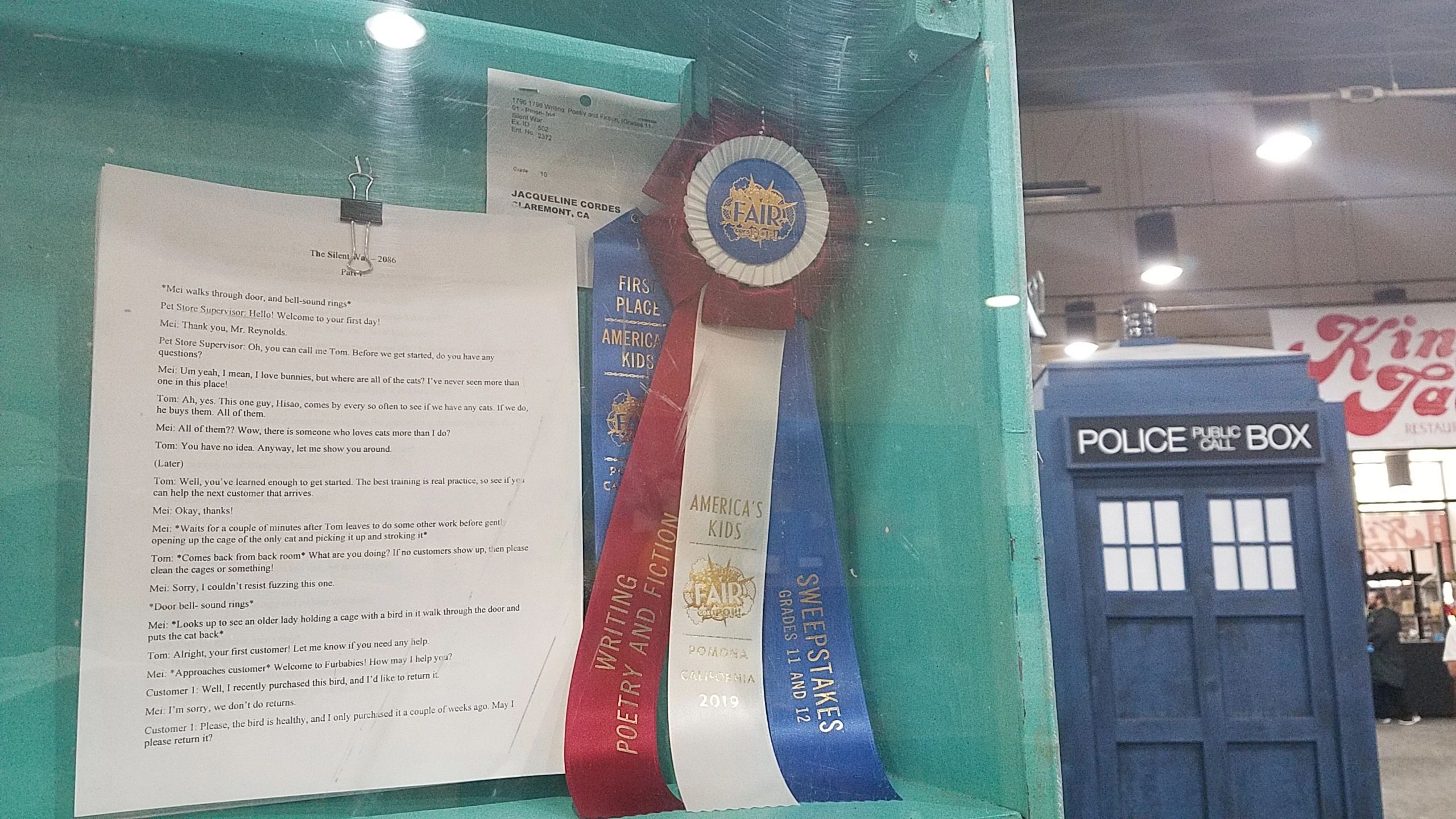
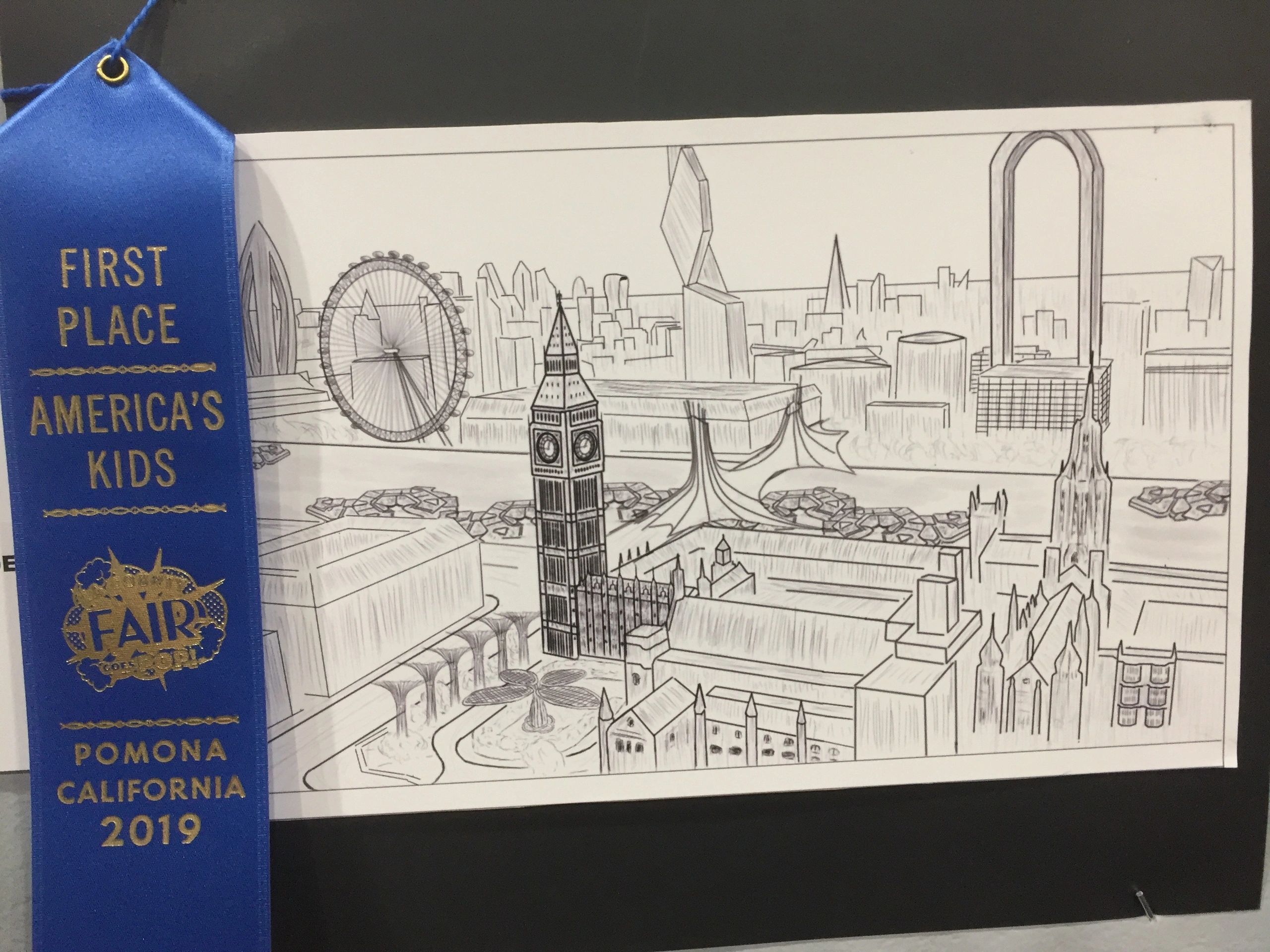
Around the time I entered high school, I came up with the idea of a supernatural being in human form battling with robots in the future while managing a relationship with a human. I would invent episodes every night as I went to sleep (I still do!) and later write down my favorite scenes (believe it or not, the Notes app on my phone is my top used application). By 2019, I had compiled all of my favorite storylines into an 80-page screenplay and submitted it to the L.A. County Fair to compete with other creative writers in the area. I anxiously awaited the results and was super excited when I found out that it had won the Sweepstakes award (best overall) for "The Silent War 2086." I had put my heart and soul into the characters and story and began dreaming of publishing it as a graphic novel someday.
Character design
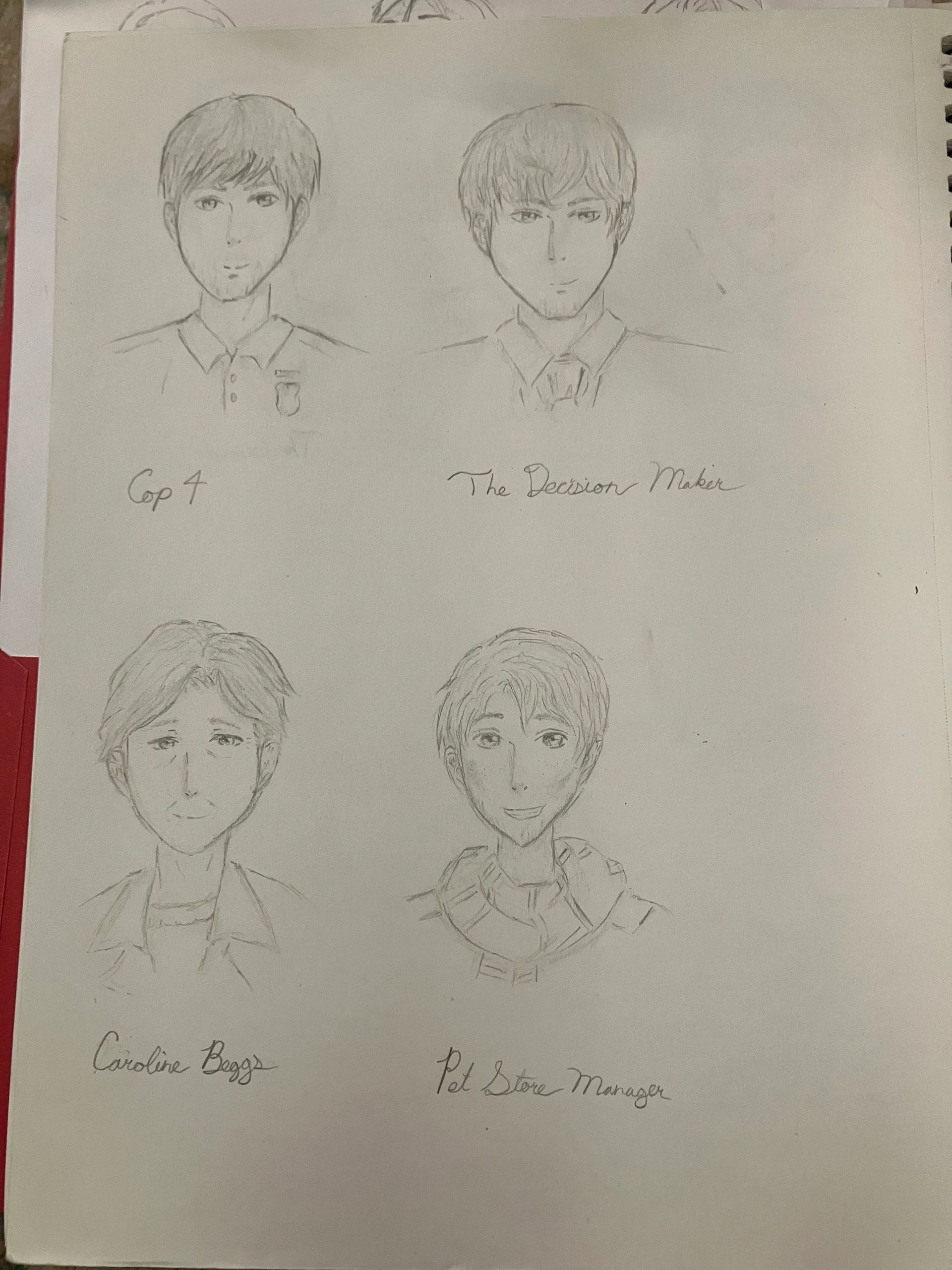
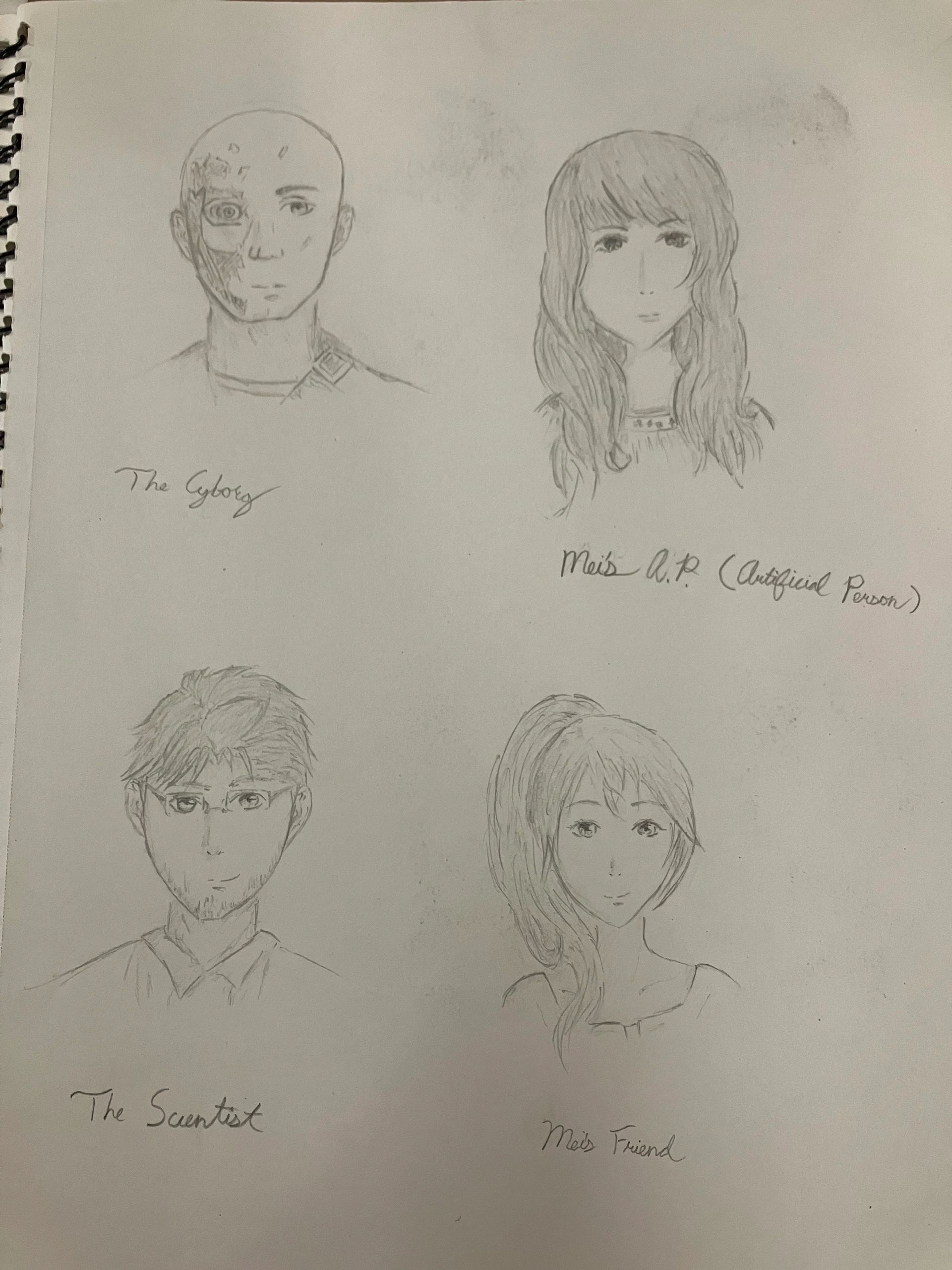
Finalizing the look of my characters
Introducing Hisao
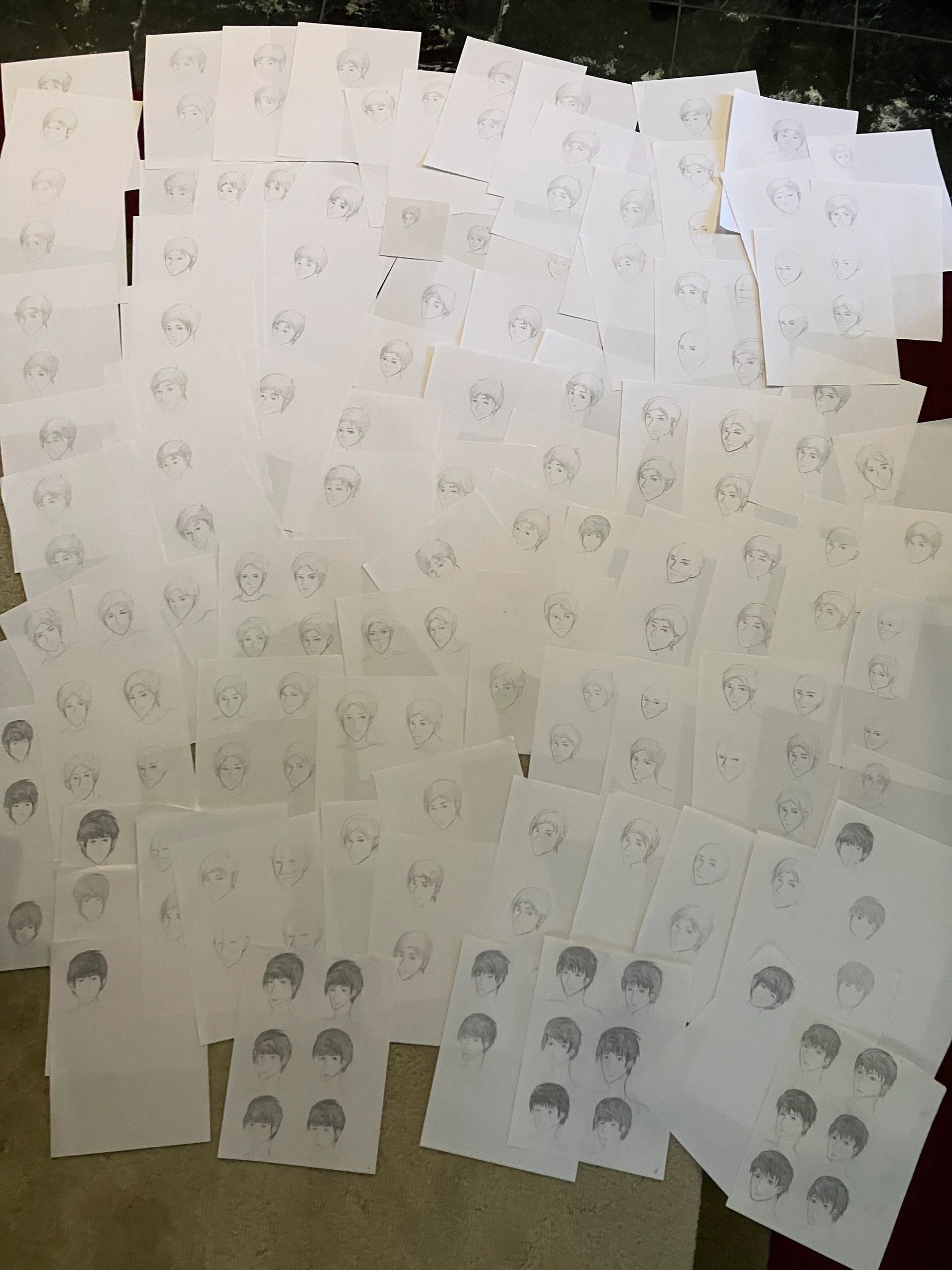
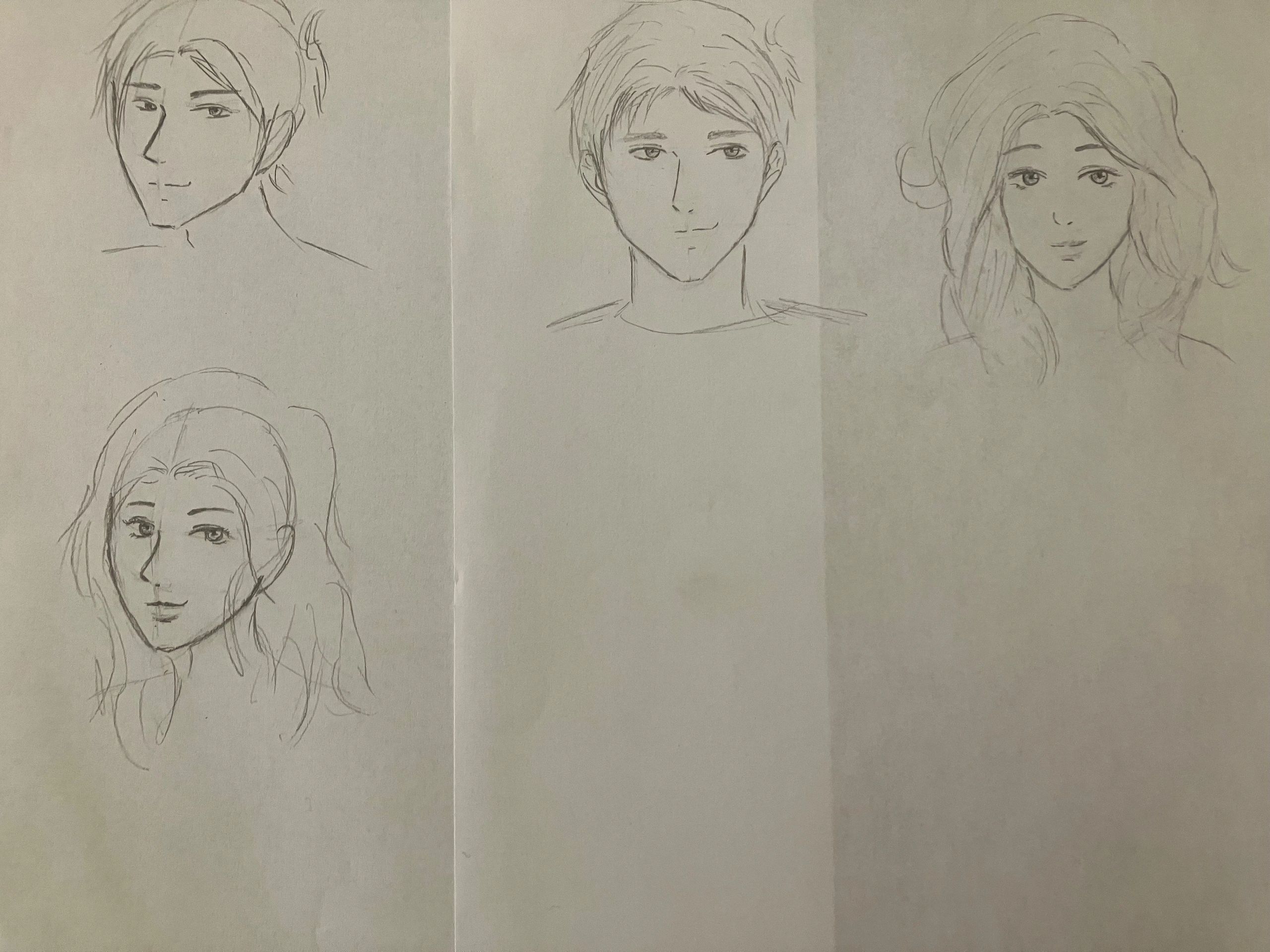
First hand-drawn version of the main characters
Technique and persistence
The Digital Art Project of a Lifetime
I started officially working on the artwork for "The Silent War 2086" in a high school Media Art class. I had an amazing teacher who taught me how to use the latest digital art technology, but it took a whole year just to draw the first few pages of the graphic novel. My friends joked that by the time I finished it, it would take place in the present day. They had a point!
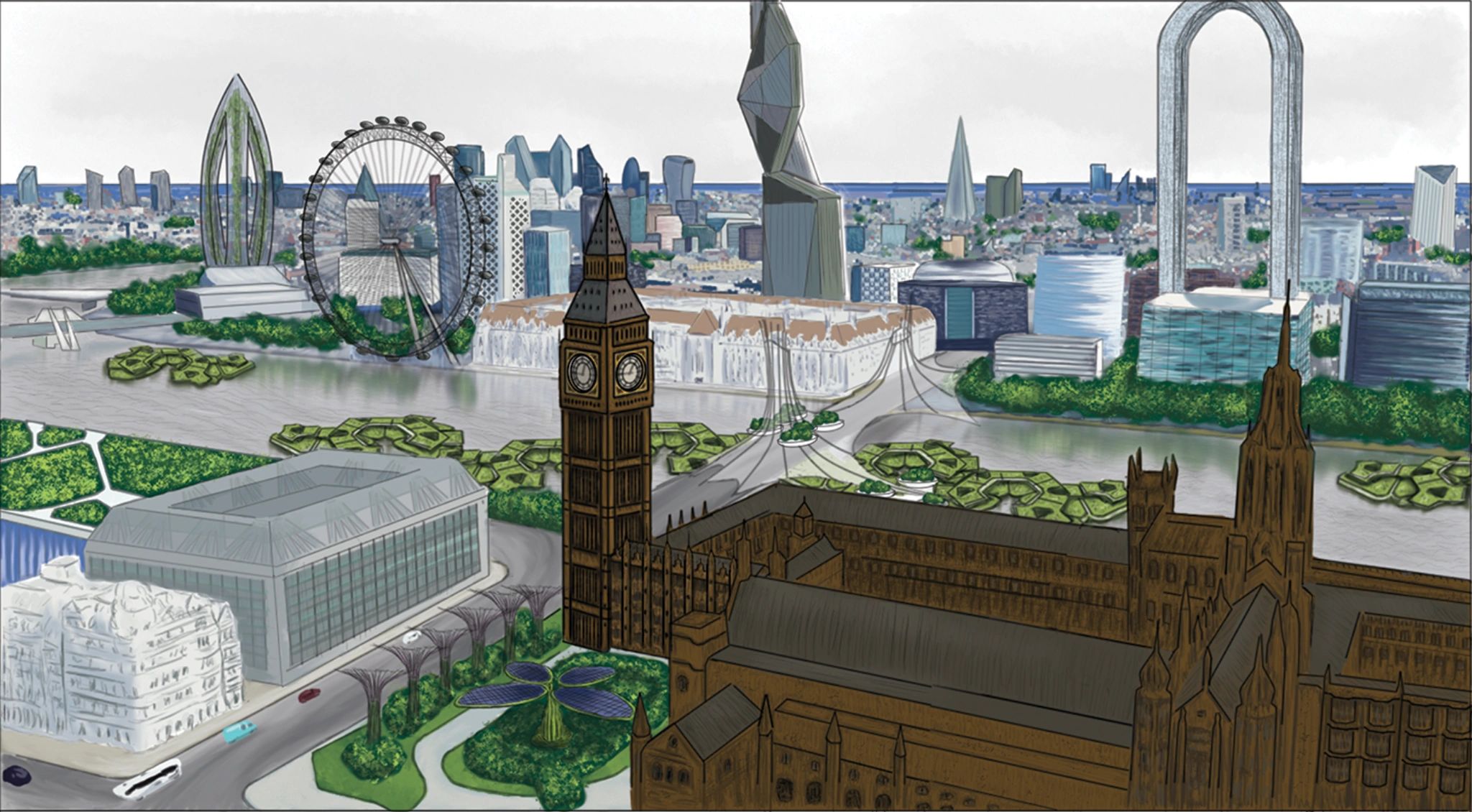
To speed up my output, I had to get creative. For example, I found that a helpful way to manage complicated architecture and perspective was to make reference models of the buildings in Tinkercad. The viewpoint can be set from within a building at any height. Using tools like Tinkercad, Blender, and PoseMyArt, and sometimes even posing and photographing physical models, I could create drawing references to import into Photoshop and improve the accuracy of my final artwork. I always enjoy looking for creative solutions to "impossible" problems!
In college, I spent a summer taking remote classes from a fantastic art teacher overseas who introduced me to page design, believability vs. realism in a story, and how to use panels to control pacing. I always assumed I would produce the entire graphic novel myself, but I just didn’t have enough free time for it. As much as I wanted to share my story and characters, I put the project on the back burner.
My first Silent War digital art
A turning point
How I went from “I can't do this” to “I can do this” ... with help!
I decided to try to find artists who could draw the roughs and help me bring my graphic novel to life, so I went on a search and evaluated the work of dozens of artists to see if we were a good fit. Some incredible artists responded, but there were also a couple who were secretly using generative A.I., which required me to become skilled at distinguishing human-drawn work from machine-drawn work by inspecting the source files. While these tests were going on, I went on a hike/art event and, rather than draw nature like the other hikers, I decided to draw Hisao being stalked by a robot without any of my usual digital tools and references. It actually wasn't bad, and I started looking at my art with new eyes.
My pencil and paper drawing had precisely the handmade quality I was looking for in the test panels! After all this time, I came to a surprising conclusion: rather than hire an artist to do the pencilwork, why not pencil the panels myself and hire an experienced finisher who can help me turn my roughs into professional-looking final pages? When I saw Daniel Haddock's work, experience, and down-to-earth personality, I immediately knew he was the one.
It's been a long and surprising journey, but now a new journey has begun as I am happily working full-time on this project, penciling the 221 pages while Daniel completes the inking and coloring. We sometimes iterate 4 or 5 times before I consider a page done, but we’re getting faster and faster. I'm sure I'll still have room for improvement with my art, especially in the early chapters, but I'm now realizing that minor mistakes aren’t something to dread. They are the artifacts that give the work a soul, and evidence that I struggled in order to put my vision out into the world.

.png)
.jpg)
.jpg)